The twin city of Mathura and Vrindavan
resound with the stories of Lord Krishna till date;
located 15 kms from Mathura,the city has more than 5000
temples dedicated to him. The place got its name from
sacred tulsi also known as Vrinda. It is said that the
place was a vine of tulsi groves hence the name Vrindavan.
God spent quite a few years in Vrindavan also known
as Braj bhoomi. The city has both centuries old as well
as modern temples.
Though there are quite a few popular temples like Radha
Raman temple, Rangaji temple, Radha Vallabh temple,
ISKCON temple but the most revered among them is the
Banke Bihari temple.
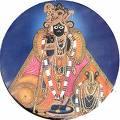
The temple was built by Swami Haridas in the year 1864.
According to folklore, Swami Haridas discovered Banke
Bihari in Nidhivan and it was later moved to the present
temple premise. The temple is a special attraction during
the month of Sravana when it adorns a special look.
The entire premise is covered with flowers and other
decorative. Special pooja is performed during Janmashtami,
the idol of Shri Krishna is adorned with pitamber(yellow
cloth) and jewelle.
Haridas Swami of the Nimbarka sampradaya, a contemporary
of the six Gosvamis, established this temple. He discovered
the Banke Bihari Deity at Nidhivana, sometime in the
16th century. Banke Bihari was originally worshiped
at Nidhivana. Banke means “bent in three places”
and bihari means “supreme enjoyer.” Haridas
Swami originally worshipped this Deity under the name
of Kunji-bihari. This is a very rich temple.
Banke Bihari was moved here when this temple was constructed
in 1864 (some say 1874). Originally Banke Bihariji was
worshiped alone. Later a small Deity of Radharani was
added.
This is the most popular temple in Vrindavana, especially
in the month of Sravana (July-August), during Jhulan
Yatra, the swing festival of Lord Krishna. There are
a number of silver-plated and some solid silver ornamented
swings, which are shown at this time. The main day of
Jhulan Yatra is the third day of the waxing moon, at
which time Banke Bihari is placed on a golden swing
(hindola).
The curtain before the Deities is not left open like
at other temples. Every few minutes the curtain is pulled
shut and then opened again. It is said that the brilliant
eyes of Banke Bihari will make you unconscious if seen
for to long a stretch. It is said that Banke Bihari
does not like the sound of bells or conch; therefore
they are not sounded in this temple.
The Deities do not get up until 9 am, because it is
believed that Banke Bihari has been up until late at
night sporting. Mangala-arati is only one day a year
in this temple, on Janmasthami. Only one day a year
can the lotus feet of the Deity be seen, on Akshaya
Tritiya (Chandan Darshan or Dolotsav), on the third
day of the bright half of the month of Vaishaka (April-May).
The autumn full moon day is the only day that the Deity
holds a flute, and also on this day He wears a special
mukut (crown). Banke Bihari comes off his altar and
can be seen in full view on the last five days of the
month of Phalguna, during the Holi festival. He can
be seen with four gopis, who are seen just at this time.
How To Get Here: Everyone in town
knows where this temple is located. This temple is located
about a 100m down a side street, just off Banke Bihari
Bazaar. Banke Bihari Bazaar is between Loi Bazaar and
the Krishna Balarama Mandir.
Temple Timings Summer: Darshan is 9 am to 12 noon and
6 to 10 pm. Winter: Darshan is 10 am to 12.30 pm and
6 to 9 pm.
|
